
Südwestdeutsches Kammerorchester Pforzheim
Douglas Bostock conductor
CPO 555 541-2
In his very full notes on the music contained in this recording, Jürgen Schaarwächter makes the point that almost all Haydn’s contemporaries in Britain have largely been forgotten. Haydn visited London in December 1790, but his music had already become known.
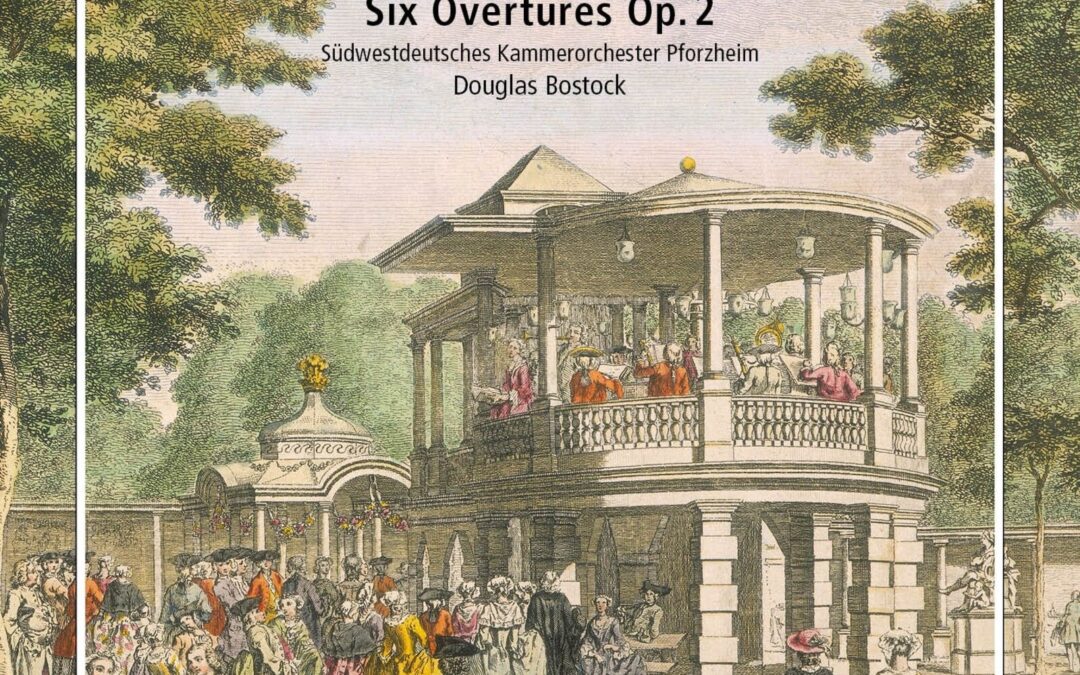
The London Pleasure Gardens, such as Vauxhall, provided performances of the new music and the artistic standards seem to have been high. William Smethergell (1751—1836) is a somewhat shadowy figure; he held organists’ posts at All Hallows Church, Barking-by-the-Tower and later at St Mary-at-Hill Church. He also played the viola in the Vauxhall orchestra and his combined income from these activities, as well as teaching, meant that his application for membership of the Royal Society of Musicians was supported by evidence of an annual income of approximately £200.
It appears that interest in his music began to wane by the late 1780s, most likely due to a change in tastes, and none of his works seem to have been published after 1800. In addition to two sets of Overtures, there are Six Concertos for keyboard and strings, some solo keyboard music, and sonatas for violin and keyboard. At this time the terms ‘Symphony’ and ‘Overture’ were almost interchangeable.
The venues such as Vauxhall and other pleasure gardens created the demand for works suited to them from both British and European sources. The latter included Carl Abel and Johann Christian Bach with figures such as the Earl of Kelly, John March, Samuel Wesley and Thomas Arne representing the native product.
The conductor Douglas Bostock has edited these works and they receive very fine performances from the Südwestdeutches Kammerorchester, Pforzheim. The formal structure is derived from the Italian concerto practice of providing three movements, fast-slow-fast. For comparison with one of Smethergell’s contemporaries, the name of Thomas Arne seems the most obvious. While Smethergell’s professional skill is very evident, the music seems to have less substance than that of Arne. In the entire set only one movement exceeds a duration of four minutes, the first movement of Op 2, No.4. Arne’s Overtures are about the same duration over the three movements, yet the quality of invention is higher. Yet Arne was probably still indebted to the example of Handel, while Smethergell looked towards the exponents of the later eighteenth century.
It is good to have these recordings of the Overtures, since it widens our knowledge and appreciation of a period still little explored.
Review by Martyn Strachan