
Alda Dizdari violin
BBC National Orchestra of Wales
Alexander Walker conductor
RESONUS RES10370
Perhaps due to his own confessed status as a composer that critics find hard to pigeonhole, Robin Holloway remains a comparatively shadowy figure in contemporary music, and he is continually under-represented in catalogues. Both pieces on this disc were written for Ernst Kovacic, but this fine spacious new issue allows more of the conversational orchestral details to register, and it is most persuasively performed and presented. It deserves every success.
Holloway has produced five Concertos for Orchestra, and his op. 70 is also as much a powerhouse for the orchestra (large, but used judiciously) as the soloist. It shimmers into life with the pianissimo overtones of a triangle trill, quickly joined by high coruscating figuration from soloist and woodwind, and develops into an often headily beautiful song-cycle without words. Prompted initially by Rilke’s collection, Les Fenêtres, Holloway used prose translations to shape the solo line, producing nine linked movements or ‘windows’.
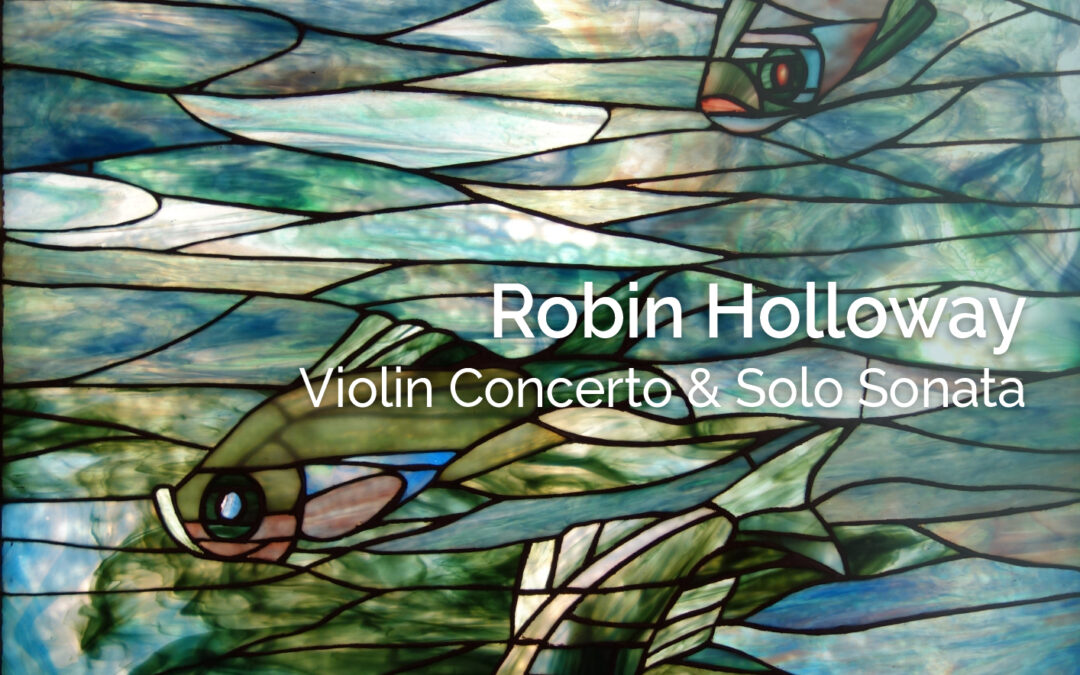
The still centre is derived from Fauré’s solo song Le parfum impérissable, and the structure of the concerto is developed further when Holloway encountered the superb Tiffany glass in John Ashbery’s New York apartment. ‘I set his windows to music, not his poems’ Holloway remarked, dedicating the work to the American poet.
The composer, who has drawn especial solace and inspiration from the song-cycles of Schumann and others, is in a very real sense a literary Romantic himself. The phrases of this richly inventive, lyrical, and appealing score, sometimes coalesce briefly into restful triads, with an almost Straussian luxuriance, before returning to the sound-world from which it emerged. It should be far better known.
The Sonata for solo violin – Holloway has written others for various instruments – is, almost inevitably, a tour de force for any composer, and I found it gripping throughout. It also has vocal elements in its construction: the third movement, marked ‘with brainless gaiety’, is one of Holloway’s individual scherzos, of which there are four on this disc alone. Here, in a riotous scena, is an entertaining chase through the traditional characters of an opera buffa, all of whom appear unpredictably in various combinations.
Before this, a slow introduction sets out the material for an allegro energico, and the second movement is a set of double variations. It ends with a brief Question and Answer: calm after trouble, comfort after anxiety. Dizdari has performed the Sonata since 1981, and her commitment and understanding illuminate every phrase.
Review by Andrew Plant