
London Choral Sinfonia
Michael Waldron conductor
ORCHID CLASSICS ORC100424
This splendid disc contains an outstanding recording of Britten’s Serenade. Much research has been undertaken to compare and contrast the various tempi in issues authorised by the composer, and all those adopted here are exactly right.
Pritchard’s approach and voice both recall Anthony Rolfe Johnson. He gives a warm and persuasive account of this towering masterpiece, with a light easy line and clear diction, while Federle is quite superb, displaying great sustaining power and colour while brushing aside all technical challenges.
The LCS respond well to Waldron’s insightful direction, with some luxurious touches, such as the yearning cello quartet in the ‘Elegy’, and the relished glissandi in a vigorously sinister account of the ‘Dirge’. The disc (which is not overfull at 65 minutes) is an essential purchase for this work alone, which is cleanly recorded with depth and spaciousness.
Britten’s Te Deum in C, a very early piece from 1934 (he was 21), is a firm fixture of cathedral repertoire with organ accompaniment, but this is its first commercial recording in the little-known version for strings and harp. It was commissioned by the BBC, and first conducted by Reginald Goodall, with Britten playing viola. The choir are rhythmic, poised and well-tuned, and soprano Sumei Bao-Smith turns the ethereal solo beautifully, while the fresh scoring brings new life to a work known mostly in other guise.
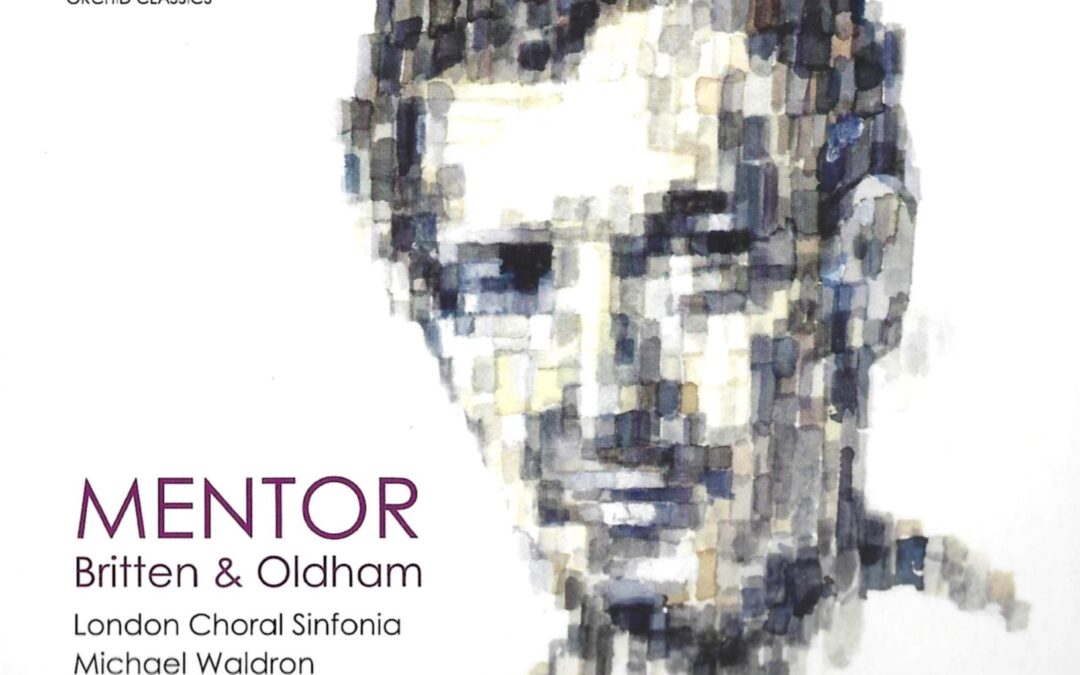
The overall title of the disc, Mentor, refers to Britten as guide to Arthur Oldham. Oldham was his only composition pupil, and claimed to have learnt far more from Britten than from his disappointing lessons with Howells at the RCM. Three works by Oldham make up the rest of the CD, all appealing and workmanlike, if somewhat derivative.
The little carol Remember, O thou man pays subtle homage to the original melody by Thomas Ravenscroft. It languished for some time in the 1963 Novello collection of contemporary carols, Sing Nowell, before the advocacy of Simon Preston and others made it more familiar.
It is dispatched neatly here, with characterful solos. Laudes Creaturarum, a colourful cantata for soloists, choirs, strings and organ, of St Francis of Assisi’s renowned Canticle of the Creatures, deserves much wider dissemination. The text in Umbrian dialect need not worry any choral society that is planning (say) Britten’s Saint Nicolas and seeking something substantial and tuneful for the first half. This is a model performance, with fine choral singing and committed soloists, especially Carolyn Sampson.
For an encore, we have the triumphant processional anthem Sacerdos et Pontifex, for choir and organ. The text, designated for the entrance of a Roman Catholic bishop, would also be an adventurous choice for the patronal festival of some enterprising cathedral. It is presented with great panache, with the organ especially benefitting from the spacious recording.
Review by Andrew Plant