
Robert Plane clarinet
RESONUS RES10388
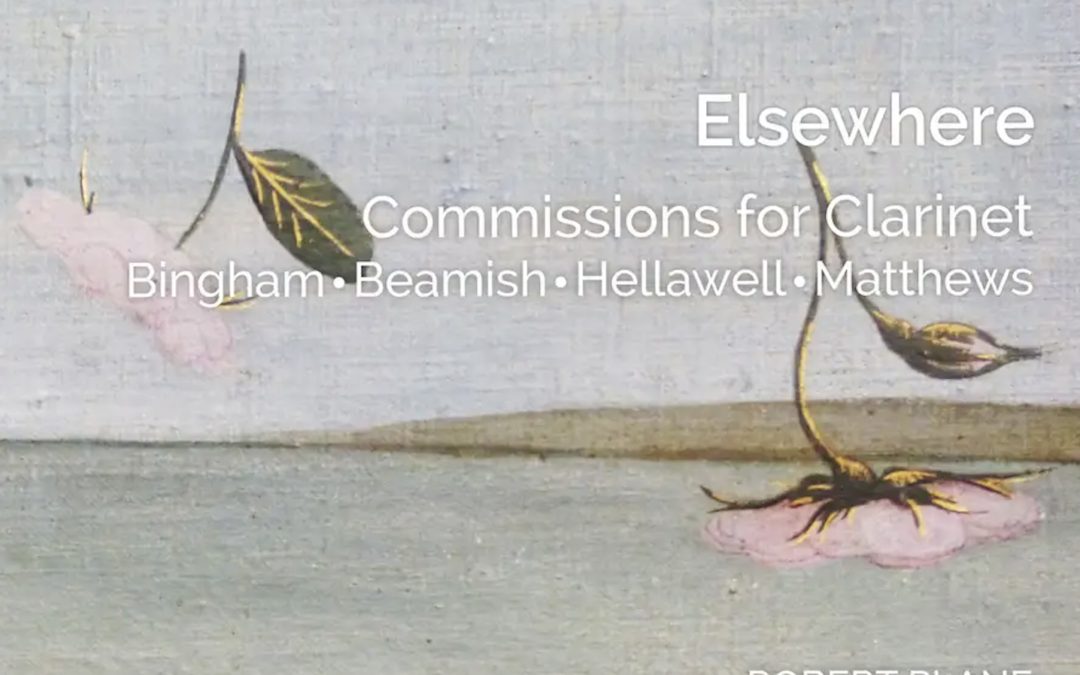
This issue is a showcase for some of the richly rewarding results of Robert Plane’s promotion of British music. It begins in fine style with Bingham’s Elsewhere, for clarinet and string quartet. These six short vignettes, inspired by four paintings by Botticelli, focus not on the main images but on very small details within them: an approach that Jan Morris, with her lovingly meticulous celebration of Carpaccio, would surely have relished.
Here the clarinet’s lowest note evokes a satyr quietly blowing a seashell, while its upper register is later deployed as chiming bells from a distant cathedral. We have a disturbingly vivid portrayal of a wasps’ nest – sul ponticello strings, flutter-tongued clarinet – and a glorious meditation Mystic Nativity, in which Bingham includes a few snatches of the thirteenth-century melody, Angelus ad virginem.
Bingham’s 2022 Concerto for clarinet and 11 strings ruminates on much darker territory. Despite its subtitle, ‘Barnaby Rudge’, and the Dickensian quotations from which its three movements take their titles, this is a reflection on the tragic war in Ukraine filtered through landscape. Its profound message therefore deserves the widest possible currency. The tune ‘Epping Forest’ is the work’s foundation, and appears fully in the rather Max Davies-influenced third movement.
In complete contrast, this composer’s Hodge, Dr Johnson’s Cat, is a charming quartet of tiny songs for tenor/speaker and clarinet. Its uproarious mewings, sneezes, and depiction of scuttling rodents has no doubt brought the house down more than once; and, given the eminent singer, the lack of texts is no hardship.
Sally Beamish’s canonic Tom’s Turn, was originally conceived for saxophone, later reworked as part of a trumpet concerto for Håkan Hardenberger, and here revisited yet again at Plane’s suggestion for solo clarinet, double-tracked. The fact of its being unaccompanied has probably contributed to booklet errors: after track 6, the superscript figures indicating performers are all out by one.
Piers Hellawell’s scores are like finely-wrought lapidary work, although the two included here may prove slightly tougher for the average listener. Woodsmoke juggles with the registers of the clarinet in microtonal gestures. The Rising of Sirius, for clarinet and piano trio, draws its lifeblood from church architecture. Optionally – as here – the audience is invited to intone short phases ‘as an act of communal music making’, which reverberating affirmation of faith and praise gradually fades into the stones.
Finally, David Matthews’ A Song for Barrie, a moving memorial to the documentary maker Barrie Gavin, proceeds logically and reverently to an entirely tonal conclusion.
With a lively recording, fine presentation, and Plane’s scorching virtuosity evident throughout, this CD is unreservedly recommended.
Review by Andrew Plant