
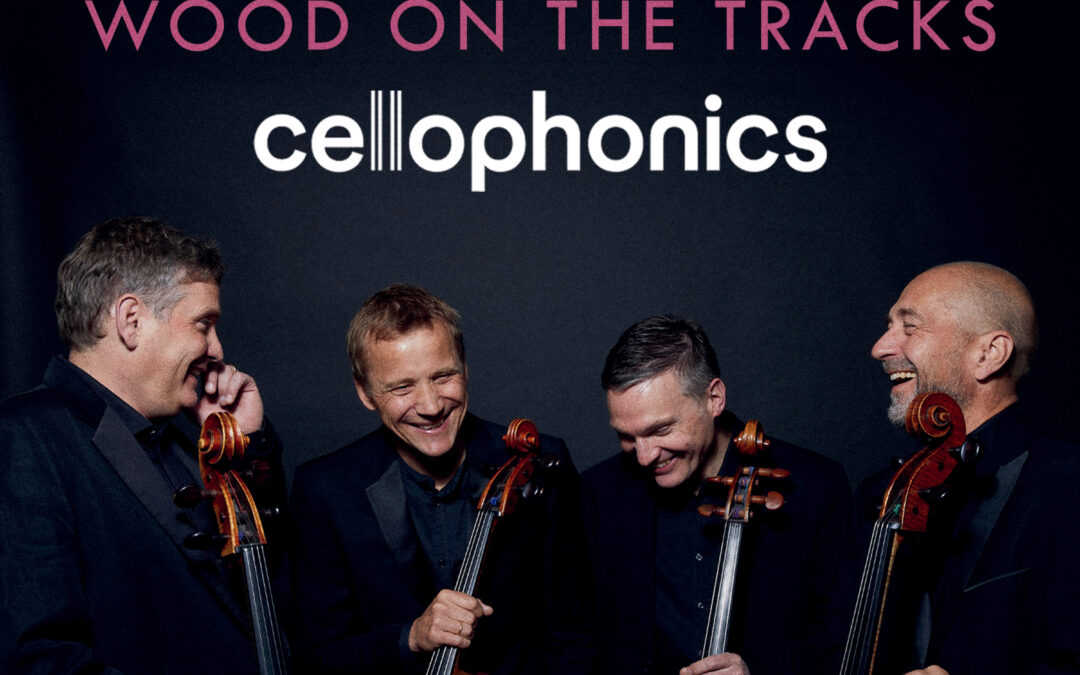
SOMM CD0731
Cello ensembles, from the 12 of the Berlin Philharmonic to the 40 of the combined London orchestras (as on a Cala CD from 1993), offer a hugely varied palette of sound, and the world of this vibrant and assured quartet is equally alluring.
All but one of the pieces (Marie Dare’s Aria) are first recordings, and all are original works for the medium. York Bowen’s Suite was only discovered by Ben Rogerson very recently, being mentioned en passant in Monica Watson’s centenary volume (Thames, 1984) but assumed to be irretrievably lost. It is a rewarding group of three: a darkly roving Prelude, a romantic Sarabande, and a galumphing Gigue, which sounds as if it originated as a setting of There was a pig went out to dig.
Roderick Elms’ Divertimento is also a most appealing piece, beginning with a thorny argument, as if daring the audience to persevere, and then relaxing into genial and tuneful writing. Cellophonics relish the purple passages and we certainly need to hear more of this composer.
Rowland Sutherland’s HOPE, based his own Japanese-influenced poem, is a similarly fascinating score, beginning in hymn-like fashion but quickly blossoming into more varied colours and styles. Dare’s Aria from her Six Pieces for cello quartet is a warm interlude, and as the CD is only 67 minutes, it is a pity that another from the set was not included; but William Alwyn’s Two Irish Tunes, sonorously scored and immediately attractive bonbons from this much-underrated composer, are highly welcome substitutes.
Unfortunately, the longest work here failed to hold my attention. I found Julia Simpson’s Mariposa, inspired by the migration of butterflies (a charming idea in principle) to be well-scored but insubstantial; perhaps that was the point.
Guy Barker’s Wood on the Tracks depicts two iconic trains crossing Idaho, the painstakingly dilatory freight Big Ugly, and the Altoona Express. (Searching ‘abandoned Idaho’ on Google brings up plenty of wonderful accompanying visual imagery.) The inevitable evocations of haunting train whistles are subtly and neatly achieved.
Both movements are compelling, but although the Express is paradoxically a few seconds longer, I found its journey, with additional percussive thumps, a less interesting landscape than that viewed from the slow train. Simon Baggs’ elegiac Elgarian Soliloquy closes the disc in a satisfying reflection of a past age.
The recording quality of the Menuhin Hall is crystal clear, bringing the excellent players right into the room while avoiding any extraneous noises.
Review by Andrew Plant