
London Chamber Ensemble Quartet
SOMM RECORDINGS SOMMCD 0723
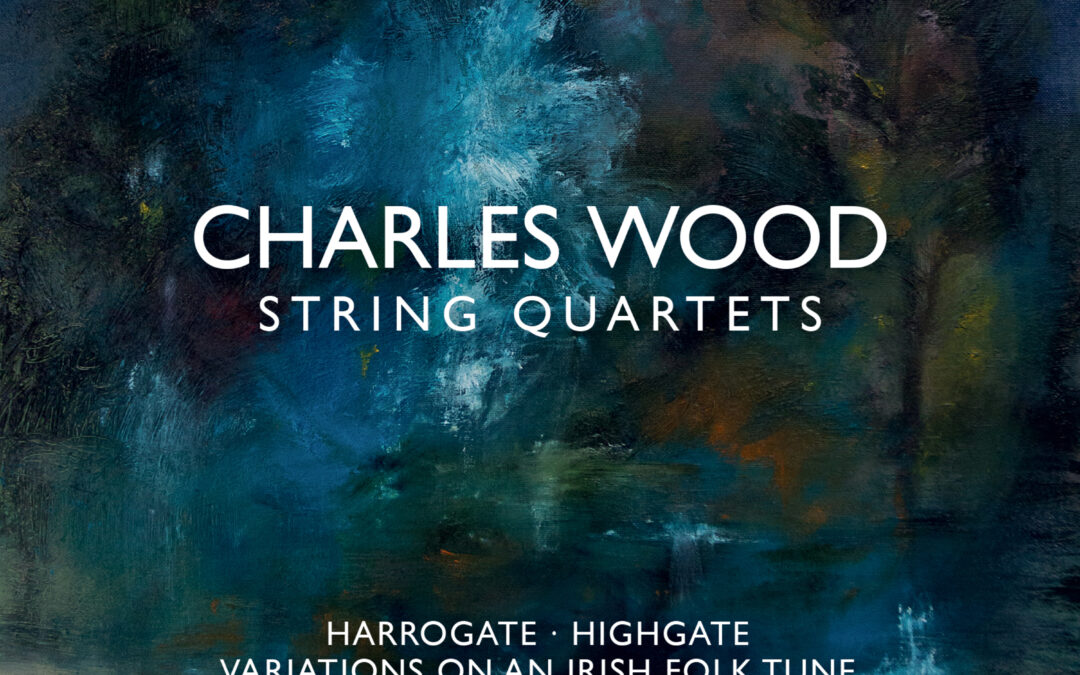
To those who only know Wood’s church music, this CD is likely to be a revelation. His quartets are big-boned and closely argued essays in four movements, heavily influenced by Brahms. Prior to the appearance of his new authoritative volume on the composer, Jeremy Dibble’s exemplary booklet notes provide all the necessary background, although no music examples, which presumably had to be sacrificed to space. All three works are immediately appealing, bursting with lyricism.
The Harrogate was written during a holiday in August 1912, when Wood’s wife availed herself of the spa waters in the Yorkshire town. The counterpoint and delightfully unexpected final cadence of the first movement is typical of the occasionally quirky turns of phrase to be found throughout these inventive scores.
Similarly engaging is the ensuing Prestissimo, a cheerful Beethovenian scherzo in C major, alternating whole-tone scales with conventional diatonic patterns. The slow movement in F minor is a rich series of variations on a folksong like melody, although Wood turned to a genuine folksong – The Brown Maid – as a basis for his final movement, a reel which whirls itself to a giddy conclusion.
Between the two Quartets is a set of variations on another Irish melody. This is not the perhaps anticipated Londonderry Air, but an untitled ‘Air’ from P. W. Joyce’s Old Irish Music and Songs (1909). Wood begins in the key of his source (A minor) and also retains the initial pause on the first note as printed.
With a good historian’s shrewdness, Ian Copley remarked of the material, ‘The theme itself is not of any extraordinary beauty or interest. What is significant is what he made of it.’ If it was intended as a slow movement to another quartet, it seems that its dimensions soon outgrew the intended placing. It was first performed in Cambridge in 1925, although had been completed eight years earlier. Together with all Wood’s quartets, it eventually saw publication in 1929 as a posthumous tribute by Gonville and Caius College, where Wood was a Fellow.
The disc closes with the earlier ‘Highgate’ Quartet, written only two years after Wood acquired his Cambridge degrees, and is perhaps a little more conventional than the Fourth Quartet. The nickname appears to have been prompted from visits to Wood’s brother, the music master at Highgate Grammar School. The third movement, a kind of passacaglia binding eight variations, well demonstrates Wood’s superb technical capabilities in contrapuntal ingenuity, before the buoyant and fiery Molto animato.
The LCEQ’s earlier issue on Somm presented Wood’s Sixth Quartet alongside works by Howells. Once again, they impress as a tight and well-honed outfit, delivering these attractive scores with great panache in a clear and lively recording.
Review by Andrew Plant